
Event
Maxi Madness
Henry’s note: this page mirrors the bugleverse.com event record. The wiki’s own treatment — reconstructed from the episode record, with per-year detail — lives at Maxi Madness (storyline) and 2024 / 2025 / 2026. This record’s 2025 section (a Lowery–Porter final) is contradicted by the podcast record (Teddy Bitcoins def. Michael Saylor); see Maxi Madness 2025 § Disputed.
The Official Maxi Madness Song performed by Scardust lead Noa Gruman video produced by Lahav Cliffshark
Maxi Madness is an annual single-elimination tournament hosted by The Bugle and sponsored by PODCONF, designed to determine the most dominant figure in Bitcoin maximalism. The event features a bracket-style competition, where influential Bitcoin thinkers, content creators, and meme warriors face off to claim the title of Maximalist Champion.
Overview
Maxi Madness is modeled after the March Madness tournament format, featuring a 64-person bracket divided into distinct categories, typically including Memers, Thinkers, and Influencers. The competition reflects the shifting power dynamics within the Bitcoin maximalist movement, highlighting the most impactful voices shaping the ecosystem each year.
Each round consists of head-to-head matchups, with winners advancing based on community sentiment, ideological influence, and narrative control. The tournament serves as a cultural pulse check on the state of Bitcoin maximalism, showcasing who is leading the charge in meme warfare, technical discourse, and media dominance.
Format
The tournament follows a single-elimination structure, progressing through:
- First Round
- Second Round
- Sweet 16
- Elite 8
- Semifinals
- Maxi Championship
Participants are selected based on their relevance, impact, and commitment to Bitcoin maximalist ideals. The Final Four often consists of a mix of meme warriors, thought leaders, media personalities, and corporate strategists, highlighting the different factions competing for dominance in Bitcoin discourse.rs, and media personalities, reflecting the broad spectrum of Bitcoin maximalism.
Bracket Divisions
Competitors are divided into four primary categories:
- Memers – The cultural engine of Bitcoin maximalism, meme warriors shape discourse through viral content, satire, and internet culture. Their influence is often measured by how effectively they control the narrative and undermine opposition through humor and ridicule.
- Thinkers – Writers, podcasters, economists, and deep theorists who define Bitcoin’s philosophical, technical, and economic frameworks. They shape the intellectual foundation of Bitcoin maximalism and provide the long-term vision for its role in global finance and society.
- Influencers – Public-facing figures, content creators, and evangelists who spread Bitcoin awareness to mainstream audiences. Their power lies in their ability to attract new adopters, shape perceptions, and defend Bitcoin against external critics.
- PODCONF – The corporate-aligned strategists, compliance advocates, and institutional actors promoting a structured, regulated approach to Bitcoin adoption. This division represents the push for Bitcoin to integrate within government and financial systems, often positioning its champions against the cypherpunk, decentralization-first ethos. The inclusion of this division has sparked controversy, as it forces maximalists to confront the growing influence of centralized forces within Bitcoin.
History
Past Winners & History
2026 MAXI MADNESS RECAP
Congrats to the most relevant podcast in the world Hell Money Podcast whose hosts, Erin Redwing and Casey Rodarmor each made it to the finals with Casey being named champion of Maxi Madness 2026.
It was a year where contestants leaned into making content to win!
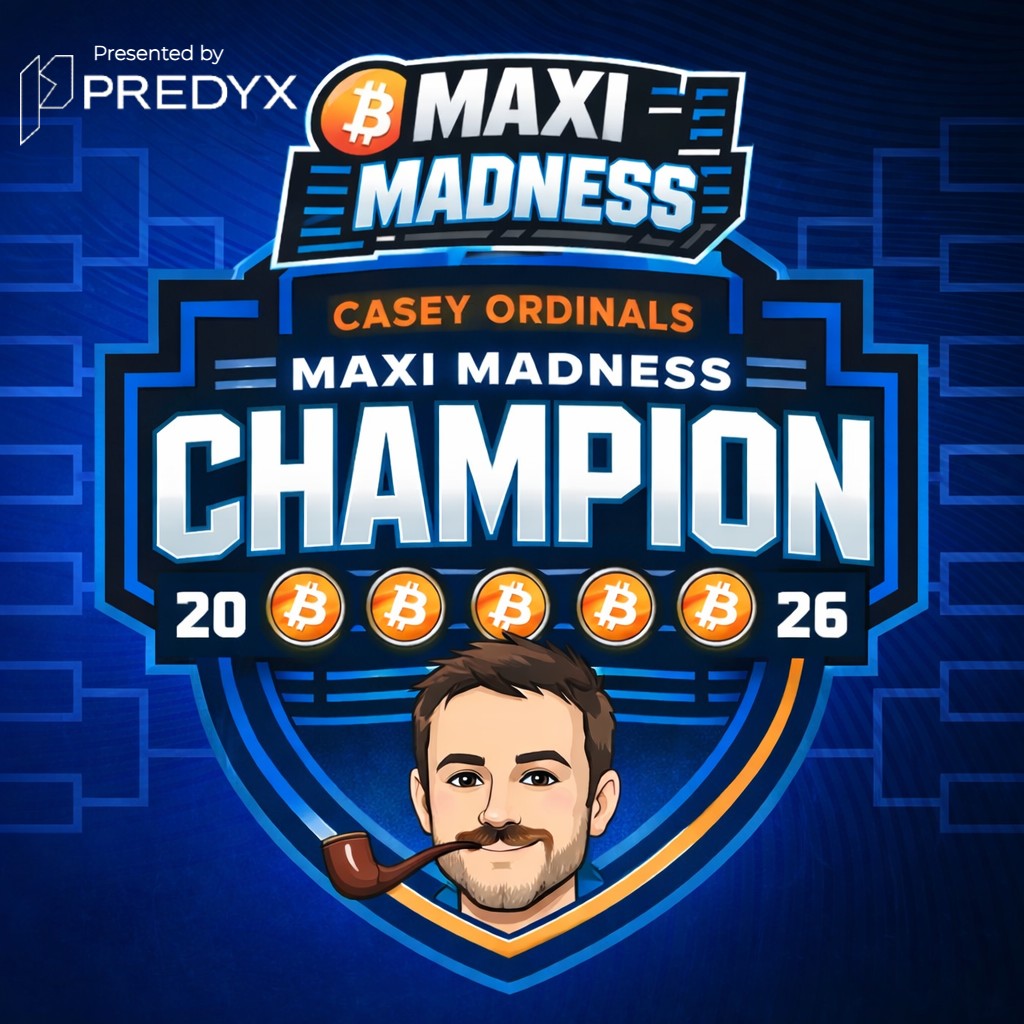
The Bracket was loaded this year!


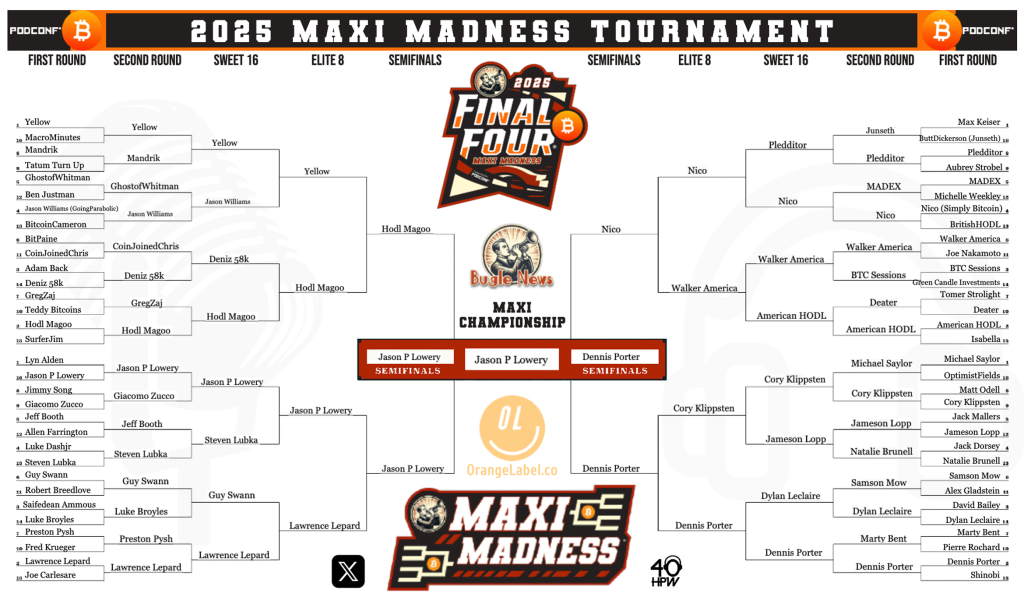
2025 Maxi Madness Tournament
Divisions


The 2025 tournament culminated in a championship match between Jason P. Lowery and Dennis Porter, two figures representing different but equally dominant forces in Bitcoin maximalism.
Final Matchup: Jason P. Lowery vs. Dennis Porter
- Jason P. Lowery – A military strategist known for his power projection thesis, framing Bitcoin as a national security imperative.
- Dennis Porter – A policy advocate and grassroots organizer pushing for Bitcoin regulation and political integration.
PODCONF’s bracket positioned them as the defining voices of Bitcoin maximalism, suggesting that policy and national security narratives will play a crucial role in shaping the movement in 2025.
Notable Matchups & Upsets
- Michael Saylor’s early elimination by Cory Klippsten, signaling a shift from corporate adoption to anti-scam advocacy as the dominant theme.
- Walker America defeating BTC Sessions, suggesting that ideological purity is favored over technical education.
- Hodl Magoo’s Cinderella run to the Final Four, reinforcing the idea that memes remain a core battleground in Bitcoin maximalism.
- Nico’s deep run, proving that Bitcoin media is more influential than ever.
2024 Maxi Madness Recap
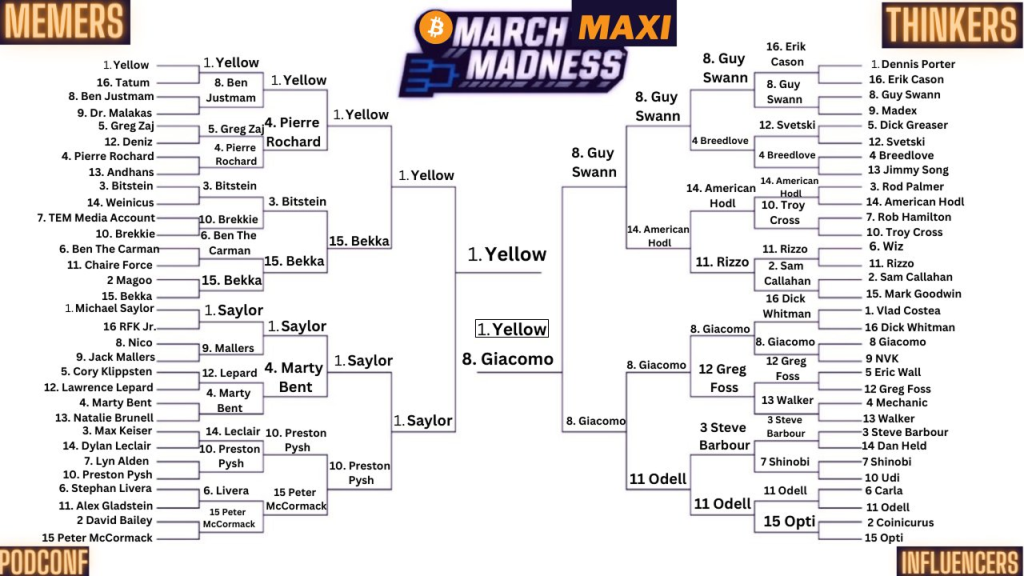
The 2024 tournament saw Yellow emerge as the Maximalist Champion, defeating Giacomo Zucco in the finals. The Final Four featured:
- Yellow (Memer)
- Michael Saylor (Thinker)
- Giacomo Zucco (Thinker)
- Guy Swann (Influencer)
The tournament established memes, intellectual depth, and media presence as the key pillars of Bitcoin maximalism.
Cultural Impact
Maxi Madness has grown into a major event in the Bitcoin space, serving as both a serious competition and a satirical reflection of the movement.
- Memers use it to gauge cultural influence.
- Thinkers see it as a ranking of whose ideas dominate the space.
- Influencers use it to measure reach and engagement.
- PODCONF treats it as a battleground for shaping Bitcoin’s regulated future.
As PODCONF’s sponsorship continues to influence the event, the tournament increasingly reflects the tension between decentralization purists and institutional interests.
Criticism & Controversies
Despite its popularity, Maxi Madness has drawn criticism from non-maximalists and independent thinkers, who argue that:
- It reinforces gatekeeping and ideological purity.
- The PODCONF division skews results in favor of corporate-aligned figures.
- The selection process lacks transparency, making it susceptible to favoritism.
Critics also argue that Bitcoin maximalism itself is too insular, and the tournament excludes those who challenge the status quo.
Nevertheless, Maxi Madness remains one of the most widely followed events in Bitcoin discourse, shaping the community’s perception of who truly leads the movement.